

Since the Israeli-American war with Iran started on Feb. 28, the world has observed whether the terrorist regime in Tehran can survive the military onslaught.
Those of us representing the civilised share of humanity have cheered on the campaign, hoping that it can bring change to ca. 90 million Iranians tormented by the draconian policies of the mullahs, and end the country's sponsorship of Islamic terrorism around the world.
For Israel the matter is existential, as the bloodthirsty theocrats have threatened to wipe the Jewish state off the map for nearly half a century now, while also pledging "death to America".
As I explained earlier this year, the war was a natural consequence of the circumstances created by Hamas' Oct. 7 attack on Israel and the subsequent wars in Gaza and Lebanon.
We should bear in mind, of course, that the goal of Tehran has always been global dominance and subjugation of the infidels to Islamic rule, as outlined by Khomeini himself:
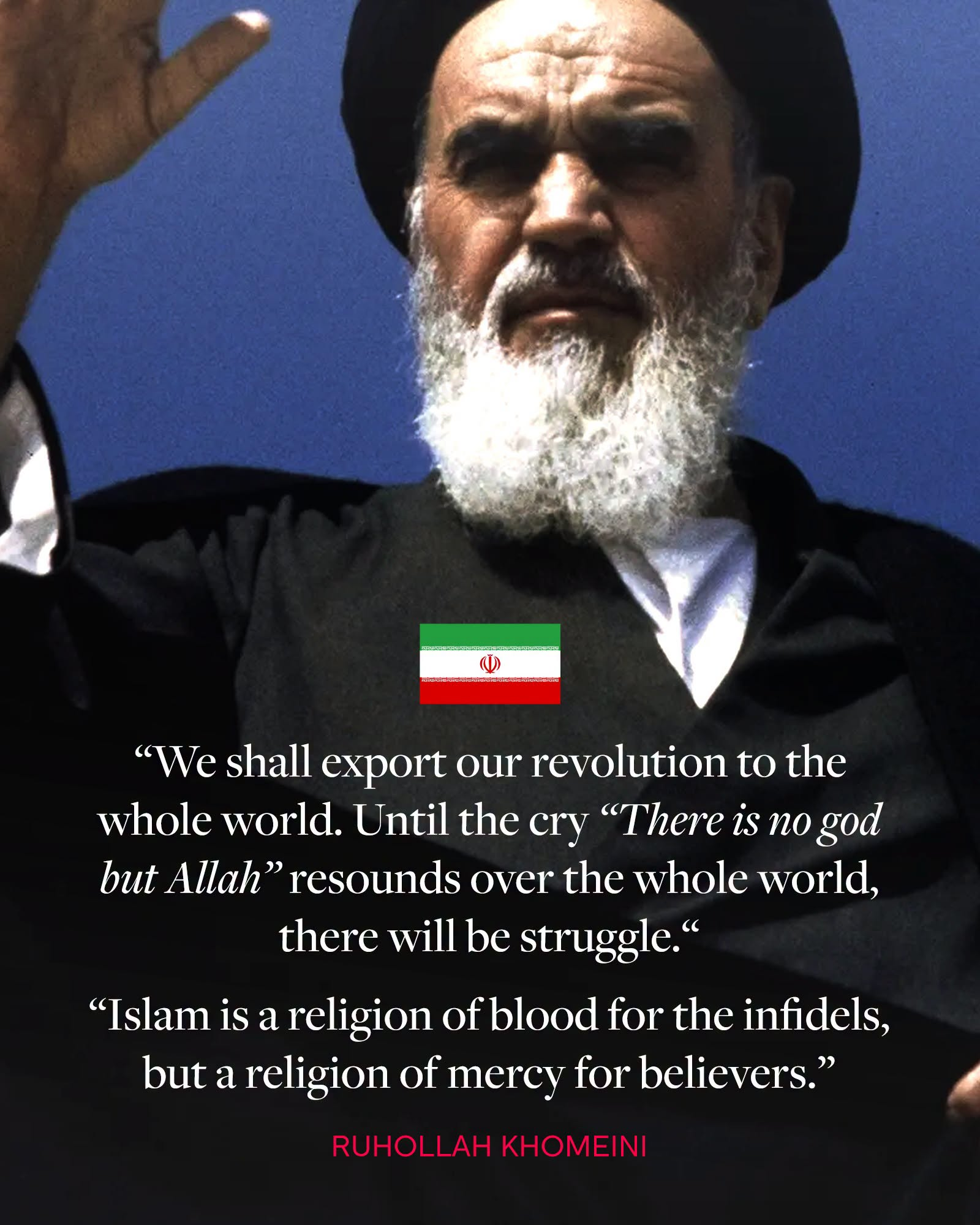
In other words: it's in the interest of all decent human beings to see his crazy successors gone. And yet, despite killing most of its leaders, the regime is still alive. Should we write off the effort to get rid of it as a failure?
Not at all.
Useful idiots
The truth is that regime change has never been the primary objective of the bombing campaign. It was a nice to have, an ideal outcome (assuming it would transform Iran into a civilised democracy). But it was not something that could be expected with an aerial campaign alone.
No, the goal was to set the regime's nuclear and missile programmes back by years, delaying (if not removing) the possibility of atomic weapons finding their way into ayatollahs' hands.
It's what Israelis have learned to call "mowing the grass", after decades of dealing with violent terrorists at their borders. Every now and then you have to beat them back, so they don't grow too powerful. If you can't eradicate the threat, you should at least keep it manageable.
Now, Napoleon is credited with the maxim advising "never to interrupt your enemy when he's making a mistake", but in the case of Iran we can extend it to virtually everything their leaders have done over the past 47 years.
Iran is governed by incorrigible imbeciles.
It may seem that the "Islamic Republic" is desperately poor today because of the burden of international sanctions, but in truth they have only squeezed the country in the past 20 years or so.
Iran is rich in oil and gas, but has never made them the economic engine that its neighbours have managed to make theirs, because of persistent underinvestment, corruption and Tehran's own reluctance to admit foreign petrochemical companies.
Protection of the crony state economy built around the IRGC elites, designed to first and foremost guarantee the survival of the regime rather than national prosperity, has essentially strangled growth. Sanctions were only the final nail in the coffin.
This is important to remember, because Iran is the most populous country in the Gulf, dwarfing all of its rival Arab nations put together.
And its nearest, Shia-majority neighbour (and ally), Iraq is up there as well.
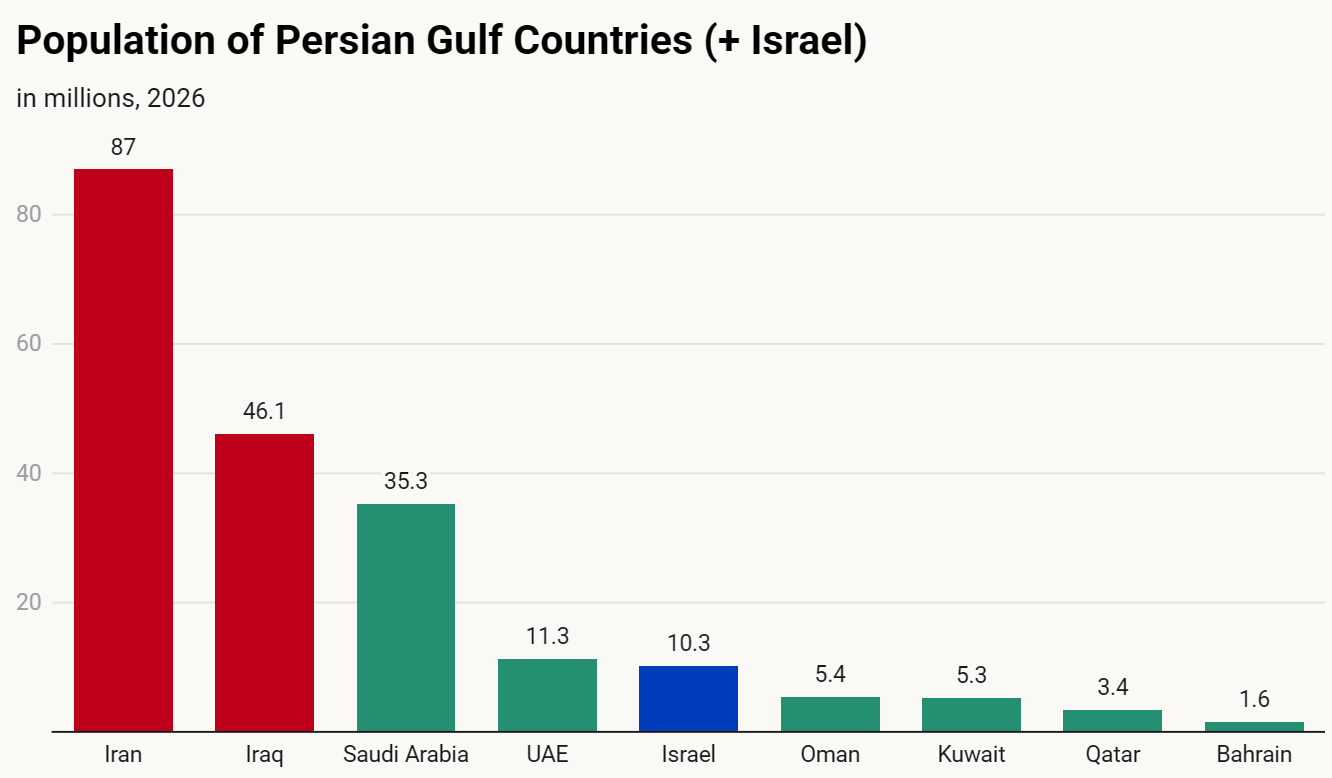
Now, let's compare it to the size of their economies:
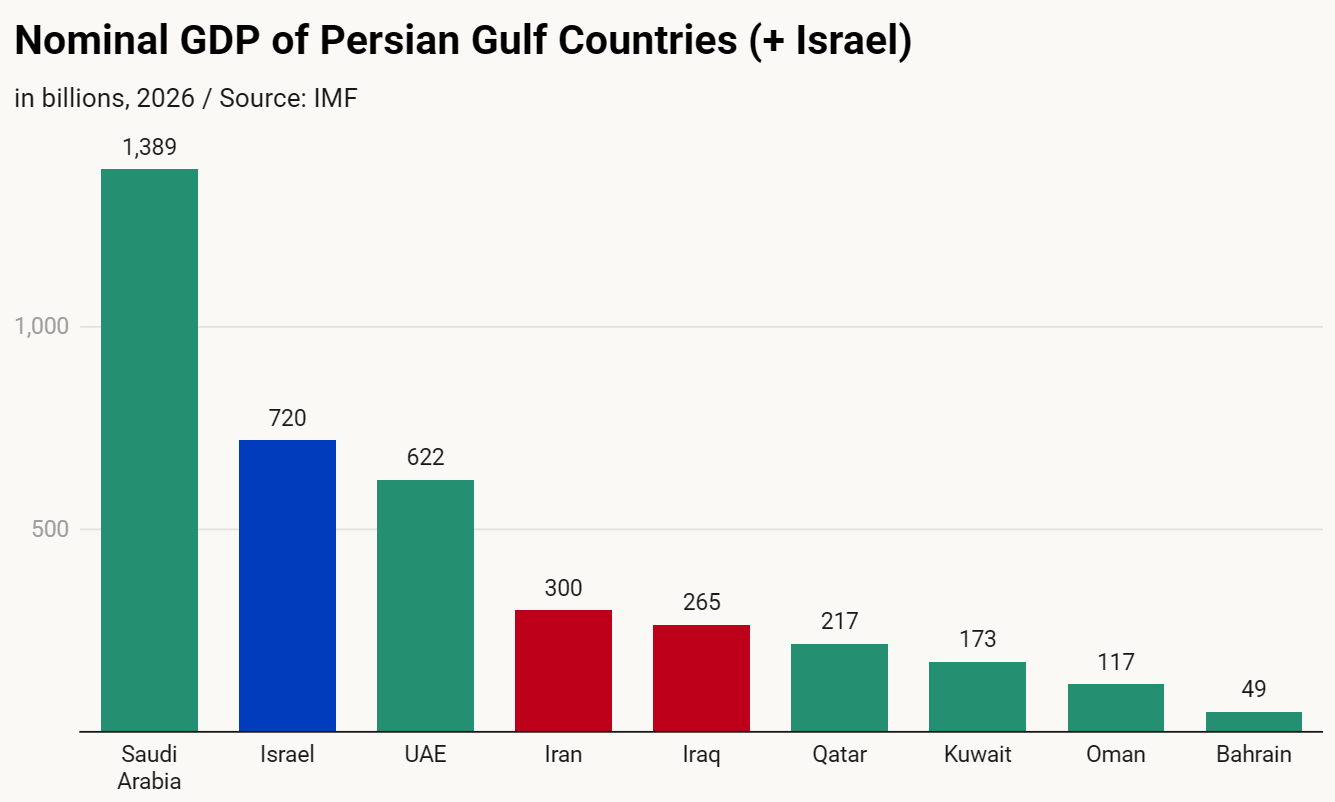
Are you beginning to see the potential risk in putting Iran in more capable hands?
If Iran reached Saudi Arabia's GDP per capita of $37,800, its economy would be more than TEN TIMES its current size, exceeding $3.2 trillion. That would make it the 8th largest in the world.
Even without the demented, medieval mullahs, Iran could become a problem for its much smaller neighbours. Let's be honest: no country that's pushing towards 100 million people and trillions in GDP is ever entirely benevolent.
While a more civilised government would no longer vow to rain nuclear destruction, it could become a bigger threat in more conventional terms.
Turkey is a good example here – a similarly sized, increasingly conservative, belligerent nation, which has devolved from a democracy to a quasi-dictatorship exporting extremism, engaging in foreign conflicts in Syria or Libya, decimating Kurds and trading threats with Israel.
Post-regime Iran might not necessarily be a hotbed of Islamism anymore (although surely there would still be pockets of it), but it would become an increasingly powerful geopolitical rival to the Arab world on the other side of the Gulf.
Would that help regional stability?
Let's not forget who seized the islands of Abu Musa and the Tunbs from the UAE. It was Shah Pahlavi in 1971, ironically paving the way for the current control of Hormuz by the terrorist mullahs.
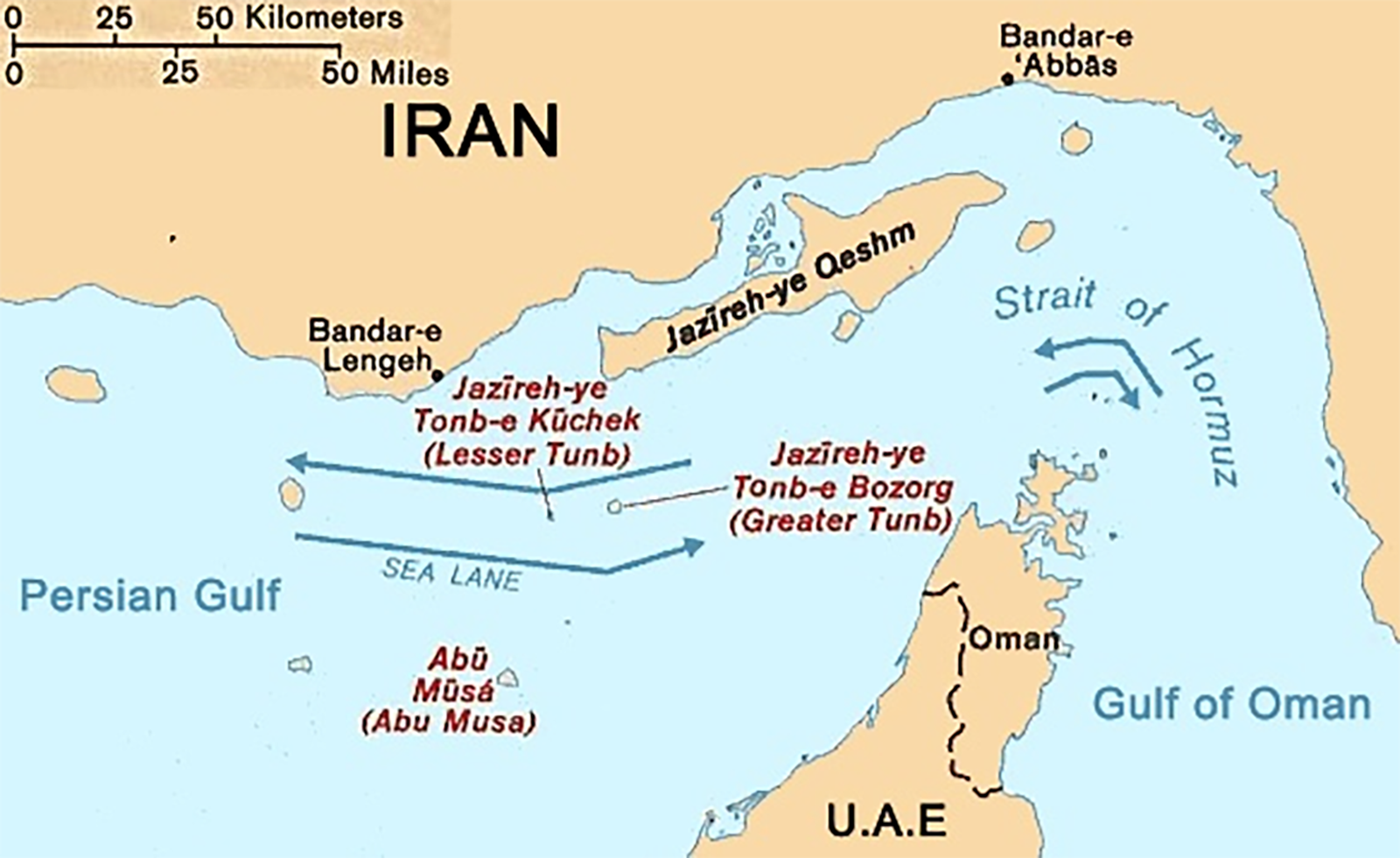
Would future Iran finally accept that the case should be ruled on by international tribunals? Would it try to mend relations with the Emiratis? Or would it possibly be swayed by domestic, nationalist sentiments and continue to refuse, fearing defeat which would force it to return the valuable land to Arabs?
Just because Iranians are vastly opposed to the current regime doesn't mean they will play nice with their neighbours once it's gone.
As if that weren't enough, we have to consider the possibility that, some years from now, another authoritarian takeover could take place – only this time in a far wealthier and likely better-armed country.
Middle East isn't exactly providing us with many examples of resilient, incorruptible, democratic governance. Why should Iran be different?
Several of its Prime Ministers have been assassinated. Mossadegh was toppled, and not, like it is often alleged, by Americans (or at least not only by them).
Too many Westerners have been swept away by this idea of a peaceful, democratic, civilised Iran, that they forget that even Shah relied on his infamous SAVAK to maintain order by imprisoning and torturing thousands of "enemies of the state".
There are many ways in which a future transition of power in the country could go horribly wrong – but likely not before a honeymoon period of global opening, which could bring hundreds of billions of dollars worth investments into the country, rapidly boosting its economy, infrastructure and military.
Defeating the crooks at the top is the easy part. But what do you do with millions of regime's people embedded in the economy and the armed forces? How do you ensure loyalty of the soldiers? And how do you prevent extremism from fighting back in the most brutal ways?
Given all of these question marks, the survival of the current band of incompetent kleptocrats – who have ruined the country, keeping it weak and isolated – is not the worst outcome at all.


